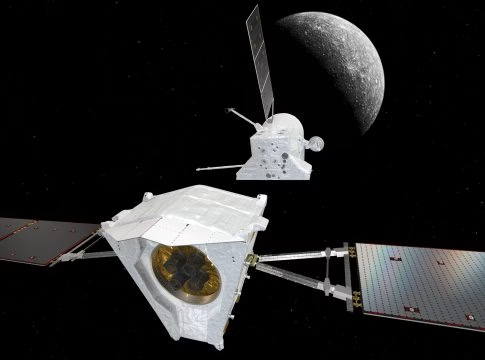

Reaching the innermost planet of our solar system represents one of the most demanding feats in modern spaceflight. On Saturday, November 21, 2026, the joint European-Japanese BepiColombo mission officially entered orbit around Mercury. This historic milestone makes it only the second robotic spacecraft in human history to circle the scorched planet. However, the arrival carried unexpected tension when a software glitch curtailed a critical engine burn.
Key Takeaways (TL;DR)
- Historic Arrival: BepiColombo successfully achieved orbital capture around Mercury after an arduous eight-year journey.
- Software Anomaly: The primary orbital insertion engine burn finished earlier than planned due to an unexpected software glitch, yet the spacecraft remains safe and stable in orbit.
- Twin Spacecraft Architecture: The mission carries two distinct scientific probes—ESA's Mercury Planetary Orbiter (MPO) and JAXA's Mercury Magnetospheric Orbiter (Mio)—which will decouple in December 2026.
- Science Timeline Ahead: Full scientific operations will commence in April 2027, unlocking new insights into Mercury's massive iron core, extreme magnetic field, and volatile deposits.
The Eight-Year Odyssey to the Solar System's Inner Edge
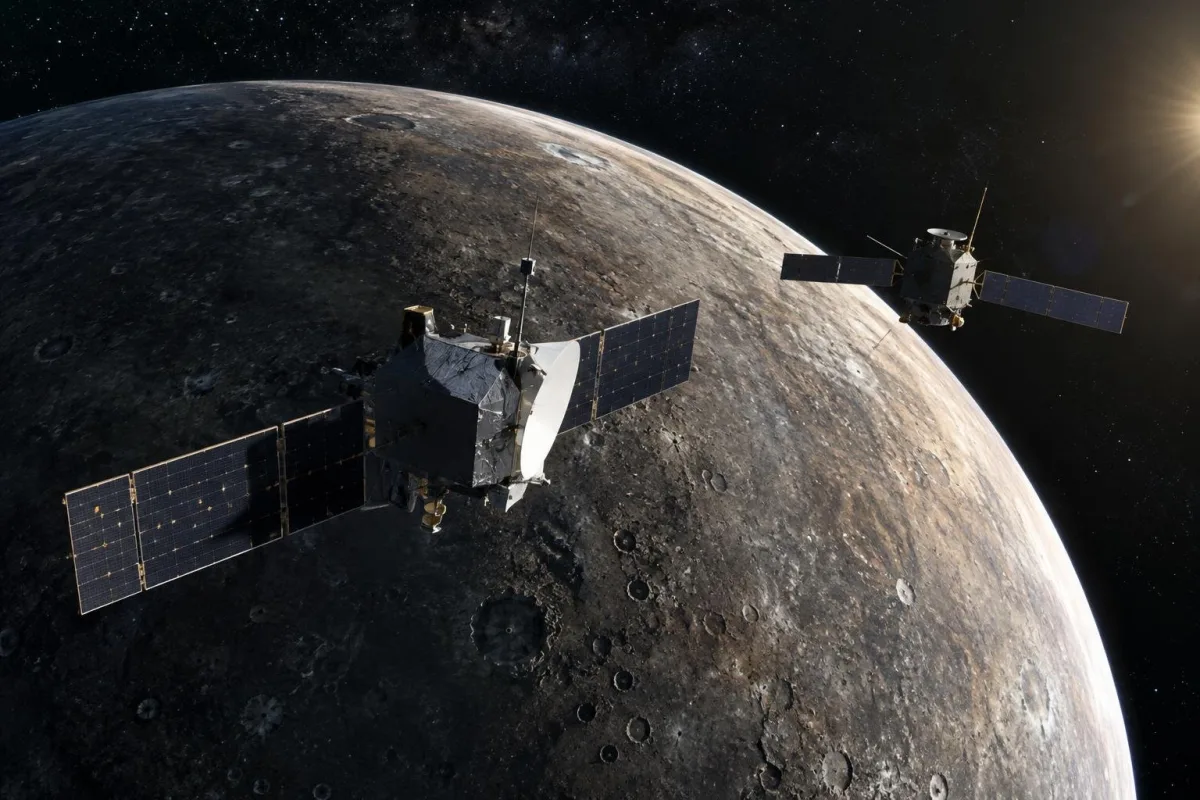
Humanity's journey to Mercury has always demanded extraordinary patience. BepiColombo lifted off aboard an Ariane 5 rocket from Europe's Spaceport in Kourou, French Guiana, in October 2018. The mission represents a flagship collaborative endeavor between the European Space Agency (ESA) and the Japan Aerospace Exploration Agency (JAXA). Named after the Italian mathematician Giuseppe "Bepi" Colombo, the probe relied heavily on the very gravitational assist techniques Colombo pioneered decades ago.
Over the course of its flight, BepiColombo navigated an intricate planetary obstacle course. It performed one flyby of Earth, two passes around Venus, and six gravitational slingshots around Mercury. Engineers originally scheduled the voyage to last roughly seven years. However, the spacecraft encountered a power shortfall in its solar arrays earlier in the cruise, which lowered the electrical output delivered to the Mercury Transfer Module (MTM). Flight controllers had to adjust the trajectory carefully, adding a full year to the cruise phase while protecting onboard hardware.
Despite these long-term propulsion constraints, the spacecraft maintained remarkable resilience. Mission teams managed electrical loads across millions of kilometers, keeping all critical systems healthy. Ground controllers at the European Space Operations Centre (ESOC) in Darmstadt, Germany, meticulously monitored every orbital adjustment. Their tireless dedication ensured that both scientific orbiters reached their destination with sufficient propellant reserves intact.
Unpacking the Orbital Insertion and Thruster Anomaly

The most delicate phase of the arrival began on November 21, 2026. At 1:24 p.m. EST (1824 GMT), the spacecraft ignited its main engines for an anticipated 37-minute braking burn. This deceleration maneuver was required to slow the spacecraft enough for Mercury's faint gravity to capture it. Ground teams experienced several tense hours while waiting for radio signals to traverse the solar system.
When telemetry finally reached Earth, flight dynamics specialists confirmed that orbital capture had taken place. Nevertheless, the maneuver did not unfold completely as scripted. Flight controllers soon discovered that the thruster firing cut off prematurely. As reported by Space.com, mission operators publicly addressed the situation via social channels shortly after verifying the telemetry:
"During the manoeuvre, the thruster burn was shorter than planned due to a software issue. The spacecraft is safe & teams at ESOC are working to understand what happened."
According to ongoing analysis covered by SpaceNews, flight software aborted the burn early after detecting an unexpected parameter discrepancy. Fortunately, the burn provided sufficient delta-v to prevent the spacecraft from skipping past the planet into heliocentric space. The spacecraft entered a stable capture orbit, and engineers are currently fine-tuning recovery burns to reshape the trajectory without jeopardizing the primary mission.
Two Spacecraft in One: Comparing MPO and Mio

BepiColombo is not a solitary probe, but rather a combined technological package. During its interplanetary cruise, the stack traveled as a single unit propelled by the Mercury Transfer Module (MTM). The MTM successfully jettisoned on September 3, 2026, leaving the two primary scientific orbiters joined together. Both orbiters carry sophisticated instrumentation designed to observe Mercury simultaneously from complementary perspectives.
ESA developed the Mercury Planetary Orbiter (MPO), which focuses on high-resolution surface mapping and geochemical analysis. Meanwhile, JAXA built the Mercury Magnetospheric Orbiter, affectionately nicknamed Mio. Mio carries magnetometers and plasma sensors to study how Mercury's magnetic field interacts with the aggressive solar wind. To highlight their divergent capabilities, the following table compares the two scientific probes:
| Specification / Feature | Mercury Planetary Orbiter (MPO) | Mercury Magnetospheric Orbiter (Mio) |
|---|---|---|
| Lead Agency | European Space Agency (ESA) | Japan Aerospace Exploration Agency (JAXA) |
| Primary Science Focus | Surface geology, composition, internal core | Magnetosphere, exosphere, solar wind interactions |
| Orbital Geometry | Low, circular-like polar orbit | Highly elliptical polar orbit |
| Spacecraft Stabilization | Three-axis stabilized platform | Spin-stabilized platform (15 rpm) |
| Planned Orbit Insertion | March 10, 2027 | December 9, 2026 |
By deploying two platforms with specialized orbits, the mission overcomes the limitations of previous single-satellite surveys. While Mio measures plasma shockwaves far out in space, MPO will scan surface craters from close proximity. This multi-point approach delivers unprecedented context for the entire planetary system.
Why Reaching Mercury Is Rocket Science at Its Hardest

Many people assume that flying toward the inner solar system is easier than traveling to Mars or Jupiter. In reality, visiting Mercury requires far more propulsion energy than reaching Pluto. Because Mercury orbits exceptionally close to the Sun, any descending spacecraft continuously picks up immense gravitational velocity. The sun acts as an enormous gravitational sink, constantly accelerating incoming objects.
To achieve orbit around Mercury, a spacecraft must shed tremendous kinetic energy. If it arrives too fast, the planet's diminutive mass cannot capture it, causing the probe to shoot back into deep space. NASA's MESSENGER mission, which orbited Mercury from 2011 to 2015, proved just how delicate this balancing act can be. MESSENGER consumed immense fuel supplies merely slowing down.
BepiColombo solved this challenge by pairing ion propulsion with repeated planetary flybys. Each gravitational slingshot acted as a natural brake, shaving kilometers per second off the spacecraft's orbital velocity. The trade-off for this fuel efficiency was an eight-year cruise through intense thermal environments. At Mercury, solar radiation is ten times more intense than at Earth, forcing engineers to wrap the probes in innovative multi-layer thermal insulation.
What BepiColombo Seeks to Discover on Mercury
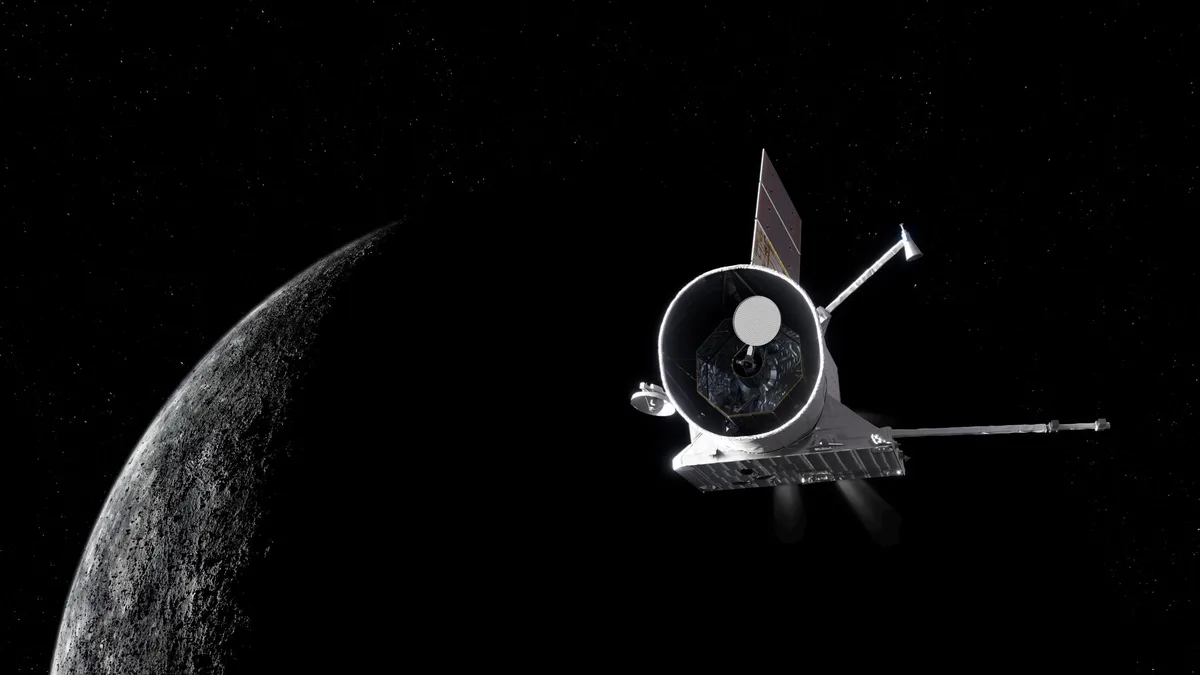
Despite its proximity, Mercury remains an enigmatic oddity among the terrestrial planets. It possesses a disproportionately massive metallic core that occupies nearly 85 percent of its planetary radius. Scientists still struggle to explain how the planet lost most of its original rocky mantle billions of years ago. Did a colossal proto-planetary collision strip its crust, or did the young Sun vaporize the outer layers?
Furthermore, Mercury generates an active global magnetic field, a trait shared among rocky worlds only with Earth. BepiColombo aims to reveal whether this magnetic dynamo stems from a molten outer core or unexpected convective currents. ESA officials highlighted the mission's extensive scope:
"The mission will study all aspects of Mercury, from the structure and dynamics of its magnetosphere and how it interacts with the solar wind, to its internal structure with its large iron core, and the origin of the planet's magnetic field."
Additionally, scientists eagerly anticipate examining the permanently shadowed craters at Mercury's poles. Radar observations and earlier MESSENGER data confirmed the presence of water ice inside these sunless thermal traps. BepiColombo's advanced spectrometers will analyze the purity and volatile composition of these deposits, shedding light on how water was distributed across the young inner solar system.
The Road to April 2027: Mission Timelines and Next Steps
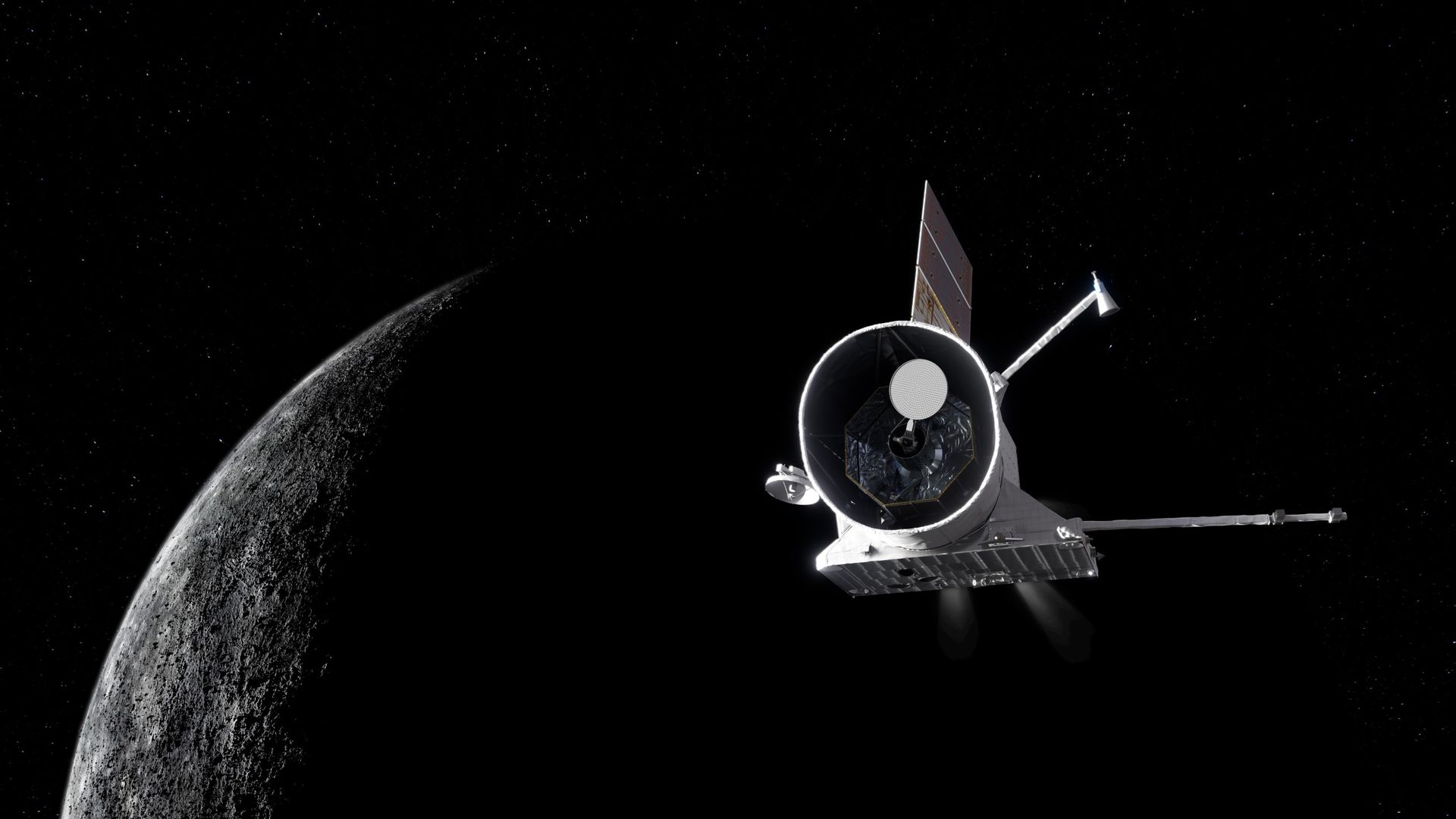
With orbital capture secured, the engineering team has transitioned to a methodical commissioning and orbit-shaping phase. Around December 9, 2026, MPO and Mio will officially separate from each other. Shortly after detachment, JAXA's Mio will orient itself and lock into its designated elliptical polar orbit. From there, Japanese controllers will run instrument checkouts while surveying the outer magnetosphere.
For ESA's MPO, the journey toward its operational orbit requires additional patience. Over the subsequent three months, MPO will execute a sequence of chemical thruster burns to circularize its path. These maneuvers will gradually bring MPO into a stable, low-altitude polar orbit by March 10, 2027. During this period, flight controllers will also incorporate the telemetry data gathered from Saturday's shortened burn to optimize all upcoming maneuvers.
Both agencies plan to begin coordinated scientific observations on April 6, 2027. The baseline science mission will run for at least one Earth year, with the possibility of an extended operational phase if hardware margins permit. Over the coming months, updates from Darmstadt and Tokyo will clarify how ground teams turned a momentary thruster scare into an inspiring masterclass of interplanetary navigation.
Frequently Asked Questions (FAQ)
Did the thruster glitch prevent BepiColombo from entering orbit?
No. Although the engine firing ended earlier than scheduled due to a software issue, flight dynamics teams confirmed that BepiColombo successfully achieved orbital capture around Mercury. The spacecraft remains safe and operational.
How many spacecraft have previously orbited Mercury?
Prior to BepiColombo, only one spacecraft had ever orbited Mercury: NASA's MESSENGER mission, which operated around the planet between March 2011 and April 2015.
Why does the mission feature two distinct orbiters?
Mercury exhibits both complex planetary geology and an active magnetosphere. ESA's Mercury Planetary Orbiter maps the surface and core, while JAXA's Mio studies magnetic fields and plasma waves in the surrounding space. Combining both maximizes scientific return.
When will BepiColombo start sending back primary science data?
Routine scientific observations will officially commence on April 6, 2027, following orbiter separation and orbital adjustment burns scheduled throughout early 2027.
Conclusion
BepiColombo's long-awaited arrival at Mercury underscores the immense complexity of deep-space exploration. After traversing billions of kilometers across eight grueling years, the European-Japanese partnership has overcome hardware hurdles, trajectory extensions, and an unexpected thruster shutdown to place two world-class laboratories into Mercury's grip. As mission controllers at ESOC refine the orbit over the coming months, the global scientific community can look forward to a transformative era of planetary discovery starting in 2027.
Watch How BepiColombo Overcame Thruster Troubles
While the mission successfully placed dual orbiters around Mercury after an eight-year trek, the critical arrival burn brought unexpected drama. These quick video breakdowns unpack the thruster glitch that cut the engine burn short and explain the spacecraft's current orbital status. Take a look at how engineers navigated the tense maneuvers to secure the mission.
Author
- Author Name: Dr. Johannes Benkhoff
- About: Project Scientist for the BepiColombo mission at the European Space Agency (ESA-ESTEC), overseeing instrument suites and planetary research agendas.
- Website: https://www.esa.int
- Social links: X (Twitter), Google Scholar, ResearchGate