Who Invented Cotton Candy?

Cotton candy, that delightful confection as soft and fluffy as its name suggests, has a surprisingly interesting history. While it may seem like a timeless treat, it actually has a relatively recent invention story, dating back to the late 19th century.

The credit for this sugary delight goes to an unlikely pair: William Morrison, a dentist, and John C. Wharton, a confectioner, both from Nashville, Tennessee. In 1897, they collaborated to create a machine that would revolutionize how we enjoy cotton candy. This machine spun finely granulated sugar into thin, airy threads after heating it. The key feature was a rotating bowl with tiny holes that allowed the melted sugar to be forced through, creating the delicate cotton candy we know and love. This innovation earned the creation the charming name “fairy floss.”

While the machine did the heating and spinning, it was the sugar itself that transformed into the melt-in-your-mouth treat. The inventors designed the machine specifically for this purpose, ensuring the perfect balance of heat and pressure to produce the signature texture. Interestingly, the concept of spun sugar wasn’t entirely new. Centuries prior, in the 1400s, Italian cooks used a similar technique to create decorative spun sugar for elaborate desserts. However, this process was highly labor-intensive, involving melting sugar and meticulously separating it into fine strands with a fork. This meant spun sugar was a luxury reserved only for the very wealthy.

Morrison and Wharton’s invention, however, democratized the enjoyment of spun sugar. Their machine made the process faster, easier, and more affordable, paving the way for cotton candy to become the popular treat we know today.

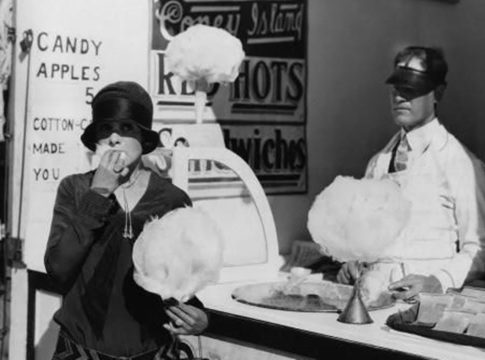
Seven years later, in 1904, cotton candy made its grand debut on the world stage at the St. Louis World’s Fair. The new treat was a massive hit, with large quantities being sold and introducing cotton candy to a wider audience. Interestingly, the name “cotton candy” wouldn’t become widely used in the United States until the 1920s. In the UK, it’s still known by its original name, “candy floss.”

The story doesn’t end there. Over time, the cotton candy machine itself underwent improvements. These advancements made the production process more efficient and ensured a consistent supply of this delightful treat. Early machines were likely hand-cranked and required constant attention. Later innovations, such as the electric motor patented in 1905 by Albert D. Robinson, streamlined the process. Today, automatic cotton candy machines can produce large quantities of the treat quickly and easily, making it a staple at fairs, carnivals, and celebrations around the world.

So, the next time you indulge in a cloud of cotton candy, remember the innovative duo from Tennessee and their invention that brought us this delightful and ever-popular treat. Their creativity not only changed the way we enjoy spun sugar, but also brought a touch of whimsy and fun to countless fairs and celebrations for over a century.

Cotton candy, that delightful confection as soft and fluffy as its name suggests, has a surprisingly interesting history. While it may seem like a timeless treat, it actually has a relatively recent invention story, dating back to the late 19th century.

The credit for this sugary delight goes to an unlikely pair: William Morrison, a dentist, and John C. Wharton, a confectioner, both from Nashville, Tennessee. In 1897, they collaborated to create a machine that would revolutionize how we enjoy cotton candy. This machine spun finely granulated sugar into thin, airy threads after heating it. The key feature was a rotating bowl with tiny holes that allowed the melted sugar to be forced through, creating the delicate cotton candy we know and love. This innovation earned the creation the charming name “fairy floss.”

While the machine did the heating and spinning, it was the sugar itself that transformed into the melt-in-your-mouth treat. The inventors designed the machine specifically for this purpose, ensuring the perfect balance of heat and pressure to produce the signature texture. Interestingly, the concept of spun sugar wasn’t entirely new. Centuries prior, in the 1400s, Italian cooks used a similar technique to create decorative spun sugar for elaborate desserts. However, this process was highly labor-intensive, involving melting sugar and meticulously separating it into fine strands with a fork. This meant spun sugar was a luxury reserved only for the very wealthy.

Morrison and Wharton’s invention, however, democratized the enjoyment of spun sugar. Their machine made the process faster, easier, and more affordable, paving the way for cotton candy to become the popular treat we know today.

Seven years later, in 1904, cotton candy made its grand debut on the world stage at the St. Louis World’s Fair. The new treat was a massive hit, with large quantities being sold and introducing cotton candy to a wider audience. Interestingly, the name “cotton candy” wouldn’t become widely used in the United States until the 1920s. In the UK, it’s still known by its original name, “candy floss.”

The story doesn’t end there. Over time, the cotton candy machine itself underwent improvements. These advancements made the production process more efficient and ensured a consistent supply of this delightful treat. Early machines were likely hand-cranked and required constant attention. Later innovations, such as the electric motor patented in 1905 by Albert D. Robinson, streamlined the process. Today, automatic cotton candy machines can produce large quantities of the treat quickly and easily, making it a staple at fairs, carnivals, and celebrations around the world.

So, the next time you indulge in a cloud of cotton candy, remember the innovative duo from Tennessee and their invention that brought us this delightful and ever-popular treat. Their creativity not only changed the way we enjoy spun sugar, but also brought a touch of whimsy and fun to countless fairs and celebrations for over a century.

Previous article
Next article

More from author

Related posts

Latest posts

Mike D’Antoni – coach and basketball player

Mike D'Antoni isn't your typical NBA coach. He carved out a unique path, finding success overseas before bringing his fast-paced, offensive-minded style to American...

How to Upgrade RAM

In the ever-evolving world of computer components, choosing the right RAM (Random Access Memory) can feel like navigating a labyrinth. Fear not, tech enthusiasts!...

What is Ice?

Ice might seem like a simple thing, but it's actually a fascinating substance with a big impact on our planet. In this post, we'll...

WordPress

Now, there are many platforms or software available for creating websites. In connection with this, WordPress is an example of the most popular CMS (Content...

Who Invented Popcorn?

Popcorn, the fluffy white kernels that magically expand under heat, is a delightful treat enjoyed by people around the world. But have you ever...

Want to stay up to date with the latest news?

We would love to hear from you! Please fill in your details and we will stay in touch. It's that simple!